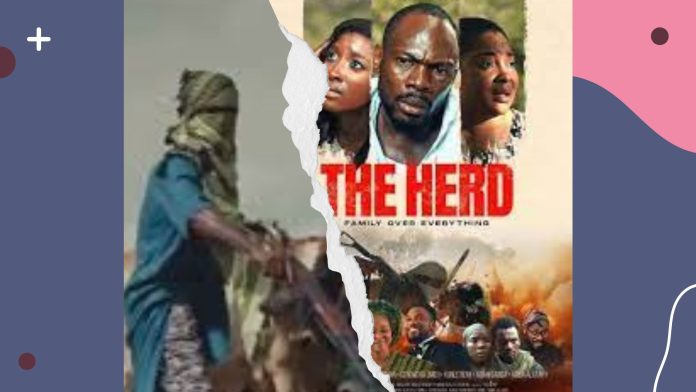


The conversation around The Herd movie has exploded online, especially among people from Northern Nigeria — but not for the reasons many assume. It’s not about denying the reality of banditry or pretending insecurity doesn’t exist. The real concern is something deeper and more dangerous: ethnic profiling.
After watching the teaser shared by @NetflixNaija, one thing stood out instantly — the heavy use of broad, negative stereotypes.
The Controversial Scene Everyone Is Talking About
In the teaser, Fulani herders are shown walking with their cattle along the road. A newlywed couple and other travellers drive by normally… until suddenly, the herders pull out guns, start shooting randomly, and kidnap everyone on sight.
That single scene creates a global image that is oversimplified, misleading, and harmful.
It suggests that typical Fulani herders are violent criminals — a narrative that does not reflect the full reality.
Yes, Banditry Exists — But the Stereotyping Is Dangerous
It is a fact that some bandits operating in certain regions are Fulani. This has been discussed openly by community leaders, security analysts, and victims themselves.
But here is the part often ignored:
The majority of Fulani herders are innocent.
Many of them are actually among the biggest victims of the same terrorists. They have lost cattle, farmland, homes, and even loved ones.
So when a major international platform like Netflix pushes a storyline that paints millions of innocent people as armed kidnappers, it does more than misrepresent — it fuels suspicion, anger, and potential violence.
The Power of Media: Why This Matters Beyond Entertainment
Film isn’t just entertainment. Movies shape global perception, influence opinion, and create lasting narratives — especially about groups that are not well understood internationally.
Instead of helping the world understand Nigeria’s complicated security situation, The Herd risks giving viewers a one-dimensional, harmful impression. Someone in another continent could watch the movie and walk away believing:
➡️ “All Fulani herders are terrorists.”
➡️ “Northern Nigeria is full of kidnappers.”
➡️ “Herders are naturally violent.”
This is how stigma begins.
This is how innocent people become targets.
This is how tension deepens in a country already dealing with fragile unity.
What the Producers Should Have Done Differently
Before touching such a sensitive national issue, the filmmakers could have:
- Conducted proper field research
- Spoke with victims, security experts, and policymakers
- Engaged pastoralist associations
- Captured the complexity of Nigeria’s insecurity crisis
Movies based on real social challenges require balance, depth, and accuracy — not sensationalism.
Where Industry Regulators Come In
Many Nigerians believe that bodies like Ali Nuhu’s Nigerian Film Corporation should guide storytellers to avoid damaging portrayals that can harm entire communities.
At the End of the Day, The Message Is Simple
Tell the story.
Expose the criminals.
Condemn the terrorist elements.
But don’t stereotype millions of innocent herders who are also suffering the consequences of insecurity.
Nigeria is battling a complex crisis, and the last thing we need is media content that reinforces division rather than understanding.
The producers of The Herd should have known better.